
St. Louis is where the Missouri and Mississippi rivers meet, and that geography has shaped the metro's construction economy for generations. The riverfront's industrial and warehousing legacy is now a redevelopment engine, while the suburban counties of St. Louis, St. Charles, and Jefferson continue their outward expansion with residential and commercial construction. The metro's infrastructure is aging in many segments, which keeps underground utility and road-repair contractors working on cycles that are not tied to the new-construction market. We finance excavators and heavy earthmoving equipment for St. Louis area operators, starting at $50,000, with most volume at $100,000 to $150,000 and above, and funding in about one to two weeks.
St. Louis is a market where consistent infrastructure work fills in the gaps between new-construction peaks. Contractors who can serve both the new-development pipeline in St. Charles County and the utility-repair work in St. Louis City can keep equipment busy across the full economic cycle rather than riding boom-and-bust volume. Having the right iron in both weight classes, funded and available, is how that kind of versatile operation is built.
St. Louis Construction Demand
MoDOT's ongoing highway improvement programs on I-270, I-64, and the I-55 and I-44 corridors generate steady roadway-related utility and drainage work. The St. Louis Airport area and the logistics development around Lambert-St. Louis International have created industrial pad and utility installation work in the North County. Meanwhile, St. Charles County residential expansion in O'Fallon, Wentzville, and Lake Saint Louis has produced a multi-year wave of subdivision site development for residential site contractors.
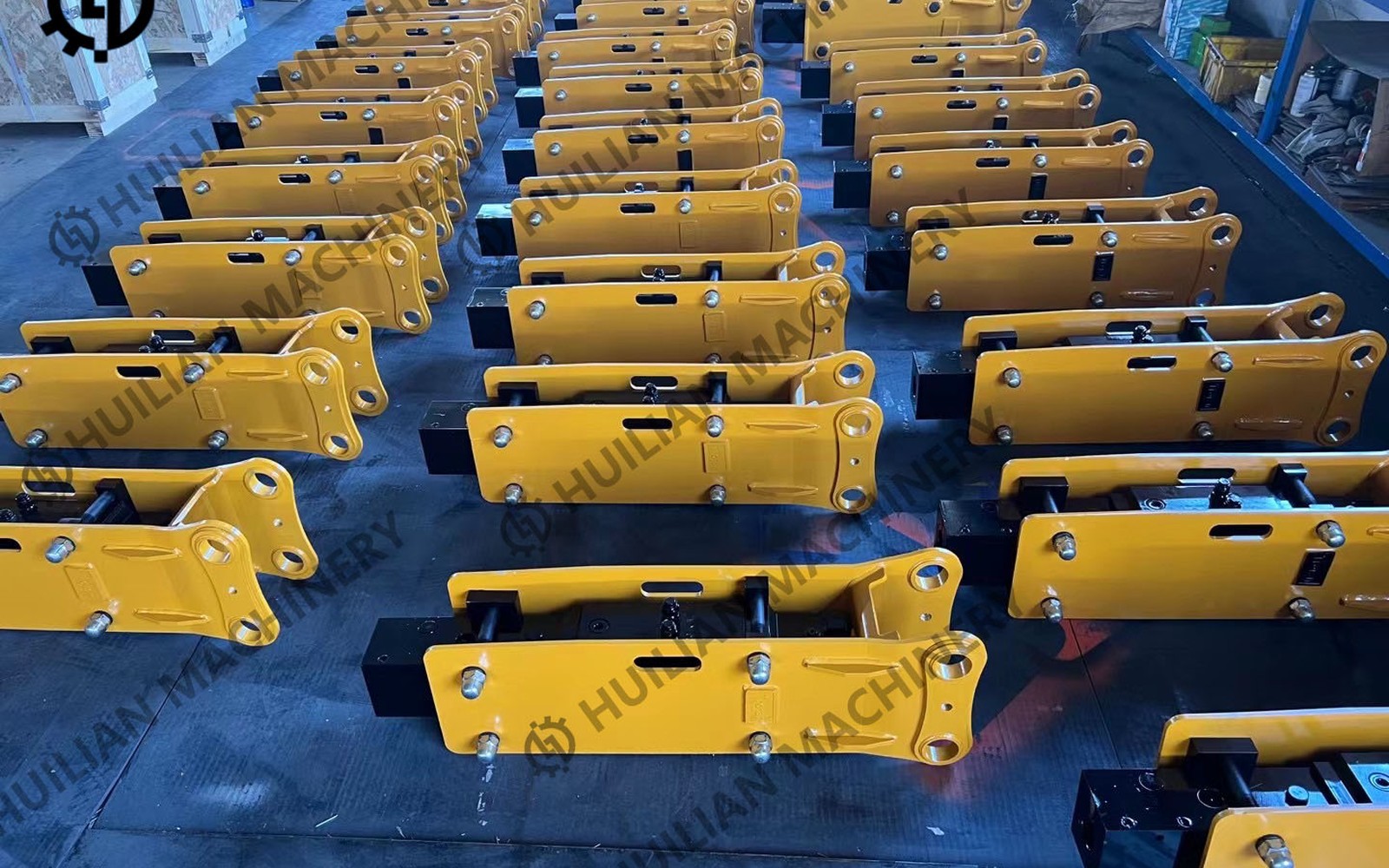
The Missouri River bottomland areas north of St. Louis and the Mississippi River bluffs in Jefferson County both require specialized approach. Bottomland sites need substantial fill and compaction before any structure can be built, which means compaction equipment and material-handling cycles as much as excavation. Bluff sites require careful rock excavation and slope management. Standard excavators and compaction equipment cover the bottomland work. Hydraulic breakers are required on the limestone and dolomite sites in the south and west metro where bedrock is near-surface and a bucket alone cannot move the material.
The Cortex Innovation Community and the ongoing redevelopment in the Grand Center and Midtown corridors of St. Louis City have generated demolition and site-clearing work that smaller contractors with compact equipment are well-positioned to pursue. Urban redevelopment in the city's older neighborhoods involves confined site geometry, existing utility complexity, and the kind of careful excavation that favors operators who know how to work in tight spaces without damaging adjacent structures.
Equipment Financing for St. Louis Contractors
Three months of business bank statements and a credit application. Application-only review handles most deals up to roughly $400,000. Decisions come back in days and funding follows in about one to two weeks once the equipment is confirmed and the purchase terms are finalized.
An equipment loan gives you ownership at payoff with fixed payments over a set term. The machine is on your balance sheet and the equity builds from the first payment. An equipment lease lowers the monthly and offers flexibility to trade the machine at term end, which makes sense for operators who want to stay current on technology or match equipment cycles to project cycles.
For operators looking to maximize first-year deductions, a Section 179 financed purchase changes the first-year economics significantly. Missouri generally conforms to federal Section 179 limits, which means a purchase in the right year can generate substantial first-year deductions while spreading the cash outlay over the financing term. Talk with your CPA about the structure before committing to a loan versus a lease, since the tax treatment differs and the right answer depends on your practice's taxable income situation that year.
We also handle no-money-down financing for qualified buyers, which preserves working capital for the project mobilization costs that often hit at the same time as the equipment purchase. For operators who need both the machine and the cash to put it to work, keeping the down payment in the business account is a meaningful consideration.
New vs. Used in the St. Louis Market
Missouri has no California-style emissions restrictions, so the full range of machine ages is eligible. The St. Louis metro sits in the center of a strong Midwest used-equipment market drawing from Illinois, Iowa, Kansas, and Tennessee as well as local inventory. St. Louis-area dealer lots and regional auction events carry solid inventory of well-maintained used iron.
We finance used machines from dealers, auction, or private sellers, and our used equipment financing program handles the full transaction. For operators managing B/C credit, used iron at a lower ticket price makes the deal more accessible and puts the monthly payment in a range that aligns with current revenue. Our B/C credit program looks at the whole picture, and recent clean bank activity combined with solid collateral value can close a deal a standard bank would turn down without much conversation.
Using Existing Equipment Equity
Experienced St. Louis operators who own iron outright have a capital resource that most businesses do not recognize until someone points it out. A Sale-Leaseback on a paid-off excavator or loader turns the machine's full market value into working capital while keeping it in the fleet under a lease. The capital goes where the business needs it: a second machine purchase, mobilization for a large project, or operating overhead during a slow-receivables period when the invoices are out but the payments have not come in yet.
A cash-out refinance on a machine that has been paid well below its current value extracts the equity without a full leaseback structure. We run the numbers if you share the current payoff and an approximate market value for the unit. St. Louis-area used-equipment values have held reasonably well, and operators who purchased machines before the recent run-up in equipment prices may find more equity available than they expect.
Grading and earthwork contractors who have built up a fleet over time often have the most untapped equity in their iron. Running those numbers before a capital decision is worth the conversation, even if the outcome is that a new purchase makes more sense than a leaseback on existing equipment.